
22.02.2026 / Guides
Did you know that White Swiss Shepherd is not actually "white"?
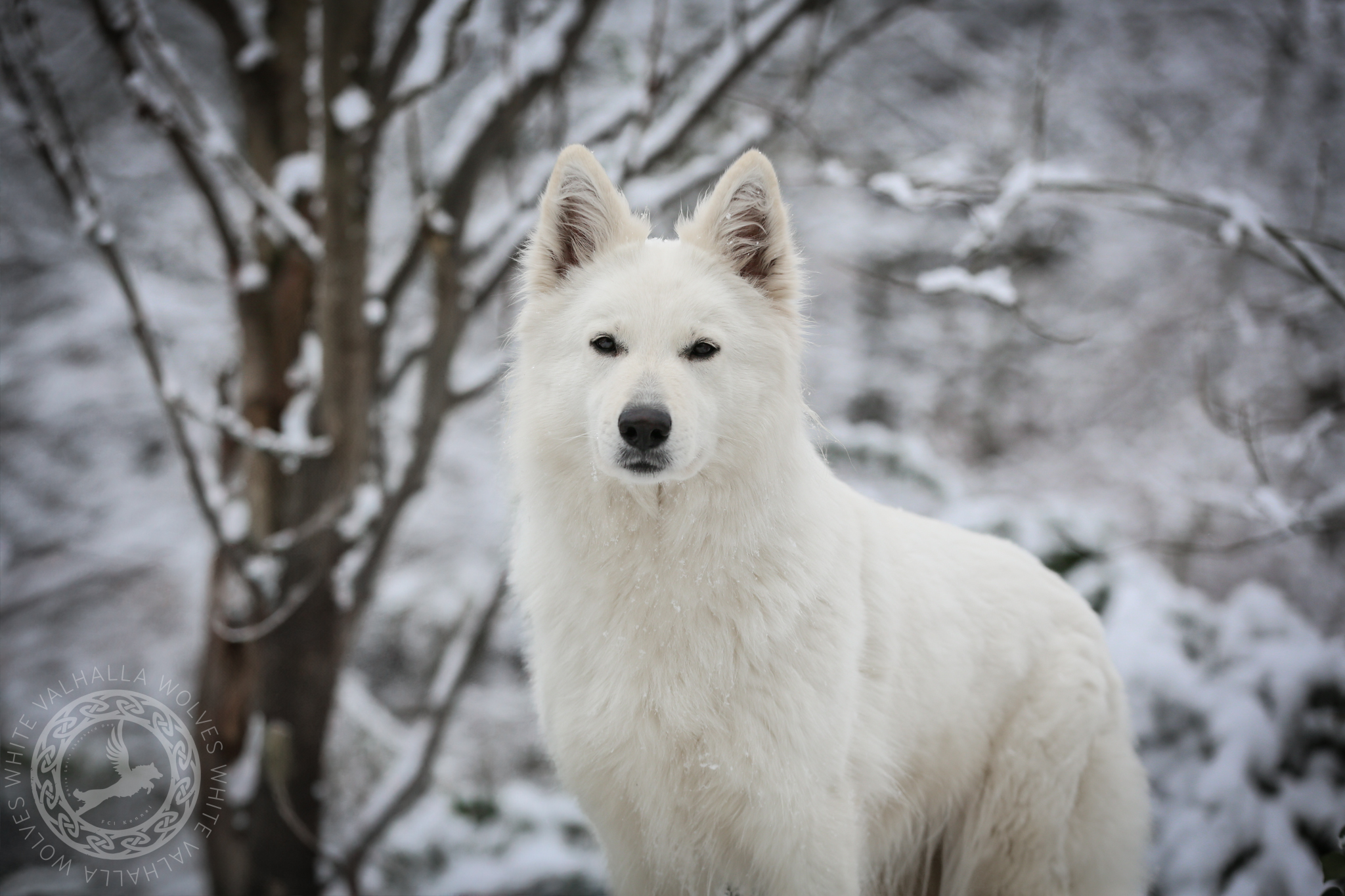
Did you know that the White Swiss Shepherd is not "white" at all?
...(in the genetic sense)
I'm returning to the topic I touched on in the previous post – when I wrote that our dogs aren't pure white. And it's not about aesthetics, but about genetics.
The breed's coat color is based on the ee transcription at the E locus – the so-called recessive red.
It is this transcription that determines the coat color.
What does ee mean?
The MC1R receptor in the hair follicle does not activate the production of eumelanin (black/brown pigment). As a result, only pheomelanin – a yellow-red pigment – is present in the coat.
At the same time, the breed maintains a black, unlightened skin pigmentation. Hence, the typical population record is described as BB DD ee, where:
• B - indicates black eumelanin (not brown)
• D - lack of the gene that lightens black pigment
• ee - inhibits eumelanin production in the coat (recessive red)
Therefore, in the White Swiss Shepherd breed:
- the nose remains black,
- the eye rims are black,
- the pads are dark,
- and the coat itself is very light pheomelanin.
The coat shade can vary – from a cooler "white" to cream or slightly biscuit. We often observe markings in typical areas – on the ears (or their tips), the back, and the tail. This is largely a matter of genetics, but not exclusively. Therefore, color is not fixed – it is influenced by both genetics and the environment. Coat shade can change based on diet, but environmental factors, particularly sunlight and humidity, also play a significant role.
The study "UV light, temperature, and humidity effects on white hair color in dogs" (K. Busch-Kschiewan, J. Zentek, F. J. Wortmann, V. Biourge)
showed that:
- UV radiation can lighten white fur,
- while heat combined with humidity can darken it in white and red dogs.
What we perceive as "snow white" is actually a very bright expression of pheomelanin – with black, normal skin pigmentation encoded in the genes.
And you? Did you know that genetically speaking, a dog isn't a "white" dog? I often hear that a carrot is enough to cause the color to change. In reality, dietary influence exists, but it's only one of many factors – and the environment plays a much larger role (and genetics!).
From my observations, male dogs tend to have a more pronounced yellow tint. I'm curious if you have similar experiences?
Models Celebrian - who falls somewhere in the middle of our whiteness scale in the pack.