
13.10.2025 / Guides
What's with all this puppy-in-a-stroller stuff?
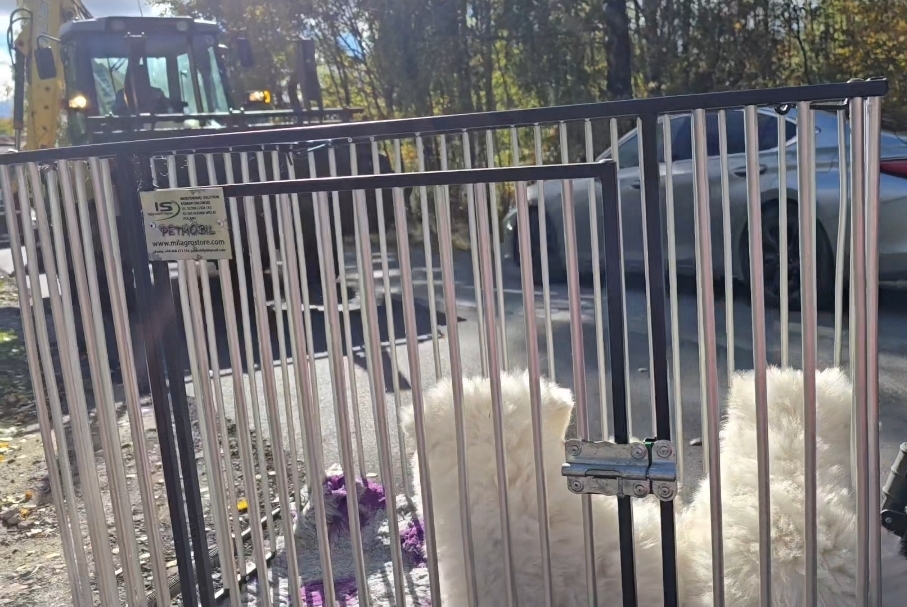
What's this whole "puppy-in-a-stroller" thing about puppies? We've heard a few theories, most often from people passing us on the street who comment and ask.
"Are they for sale?"
And although in theory they are, we always answer "no" – firstly, at this age, they're already reserved and eagerly awaited, and secondly, some people think they're just in a shop window, and you can just walk up to them and choose one.
Others think they ride because it's more convenient – after all, they don't get tangled underfoot or run around, and why bother when you can tick off a walk without unnecessary effort. Well, no, because after 9 weeks, we do walk on leashes. So why?
This is one of the stages of habituation, the gradual familiarization with the stimuli that will accompany them into adulthood – street traffic, engine sounds, new smells. A stroller provides a form of protection for the puppies – physically protecting them from premature exposure to viruses and bacteria, but also keeping them a little further away from new stimuli and closer to each other.
During these walks, the puppies learn that the world can be noisy and busy, but it doesn't have to be dangerous.
They sometimes get a little stressed – especially when a truck or motorcycle passes by.
And that's precisely the point.
We want them to experience a small dose of stress, after which they can reassure themselves that nothing bad has happened. This builds resilience – not only to specific sounds and sights, but also to the very presence of new, unpredictable situations.
This way, when it's time for their first real walks, they will be more calm and curious, instead of fearful of the unknown.
On their first outings, the puppies are always accompanied by an adult female dog – most often Valkyrie.
This is an important point of reference for them: in stressful moments, they naturally test how the adult dog reacts. An older, trained dog, with its balanced, calm demeanor, shows them through body language that there's nothing to fear – and that not every new person or dog on the street requires a reaction.
This is a lesson that can only be taught through example.
It's worth continuing this type of teaching – if we don't have a dog professor at our disposal, at least demonstrate the calm and composure we want to see in our dog.